What is HPV?
How much do you know about HPV?
HPV infections are very rare.
HPV infections always lead to health problems.
HPV can cause various types of cancer in women and men (e.g., cervical cancer)
What are HP-viruses?
HPV is short for human papillomavirus. They are one of the most common infections transmitted through intimate contact. Some HPV types cause benign genital warts (low-risk HPV), others are associated with cervical cancer and other types of cancer (e.g., vulva, vagina, anus, mouth and throat and penis) (high-risk HPV).
There are over 200 different HPV genotypes.
How does my child get infected?
HPV can be transmitted through direct skin and mucous membrane contact in the genital area, especially during sex. Transmission is also possible during oral sex. However, infection without mucosal contact is unlikely - HPV does not get into blood, saliva or breast milk. Normal kissing, donating blood or breastfeeding therefore pose no risk.
Contraceptives such as condoms offer a certain degree of protection, but not complete protection, as the virus can also be transmitted in areas of the genitals not covered by the contraceptives.
How widespread is HPV?
Almost all people are affected by HPV in the course of their lives.
85 to 90 % of men and women become infected with a high-risk pathogen as soon as they become sexually active - even if they only have one sexual partner or have sex once. It takes up to two years for an HPV infection to heal on its own. Because the infection with high-risk HPV viruses does not cause any symptoms, it can be passed on unnoticed.
The HPV vaccination protects against infection and is most effective before you become sexually active.


Why is HPV dangerous?
HPV can be dangerous because in around 10% of those infected, the infection with the virus remains and can cause cancer in some people. It can take up to 15 years for an infection to develop into a malignant tumour.
HPV-related cancers are often fatal!
Every year, around 300,000 people worldwide die from cancer caused by HPV - that is equivalent to the entire population of Cincinnati.

What diseases does HPV cause?
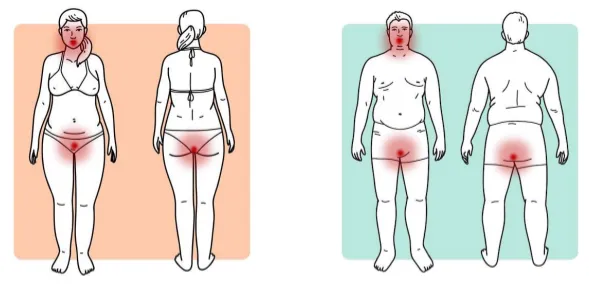
HPV is responsible for
- Genital cancer (on the cervix, vulva, vagina, penis)
- Cancer in the head and neck area
- Anal cancer
- Genital warts
The two most common high-risk HPV types, HPV 16 and 18, cause around 70% of cases of cervical cancer.
The less risky HPV types 6 and 11 cause genital warts, a common but benign disease of the genitals that can be unpleasant and long-lasting.
Further information on diseases
- Cervical cancer
- Vaginal cancer
- Vulvar cancer (cancer of the external female genitalia)
- Penile cancer
- Anal cancer
- Mouth and Oropharyngeal cancer
- Genital warts (condylomas)
Can HPV be treated?
Direct treatment of HPV infection with medication is currently not possible.
However, diseases caused by HPV can be treated:
- Genital warts: they can be surgically removed, treated with laser procedures or removed by icing (cryotherapy). There are also local treatments with creams or solutions that stop the virus from multiplying.
- Severe cell changes on the cervix: In this case, conisation is performed to remove the altered tissue in order to prevent progression to cancer. The other HPV-related cancers in the anal and genital area can also be prevented by treating their precursors.
How do I know if my child is infected?
In most cases, high-risk HPV causes no symptoms and often goes unnoticed (genital warts may be visible).
Thanks to a strong immune defence, the infection usually heals itself within 1-2 years without any health problems. This is why many of those affected do not realize that they have had or have an HPV infection. Nevertheless, they can still infect each other.
The HPV test is an important part of cancer screening to determine whether a woman is infected with HPV and therefore has an increased risk of cervical cancer.
Is my child immune after an infection?
After an HPV infection has subsided, it is possible to become infected again. An infection that has been overcome does not provide permanent protection.
Vaccination is different - it offers longer-lasting protection.
You want to find out more about the individual types of cancer?
Learn more